Port St. Lucie keeps showing up on relocation lists for a reason. Families, retirees, and remote workers leave denser South Florida markets for more space and a calmer pace. Most land happy. The wrong choice still costs you, though. This guide walks through Port St. Lucie neighborhoods, the real 2026 cost picture, and what moving day actually looks like in this city.
TLDR: Moving to Port St. Lucie in 2026 can be one of the smartest moves on the Treasure Coast. The keys to a smooth move to Port St. Lucie are matching your neighborhood, planning around weather, and locking the right calendar window. The catch is fit. You have to match the right neighborhood to your lifestyle and plan around Florida’s heat, HOA rules, and hurricane season. Master-planned areas like Tradition and St. Lucie West fit families. No-HOA corridors suit boat and RV owners. The right plan turns a stressful relocation into a smooth one.
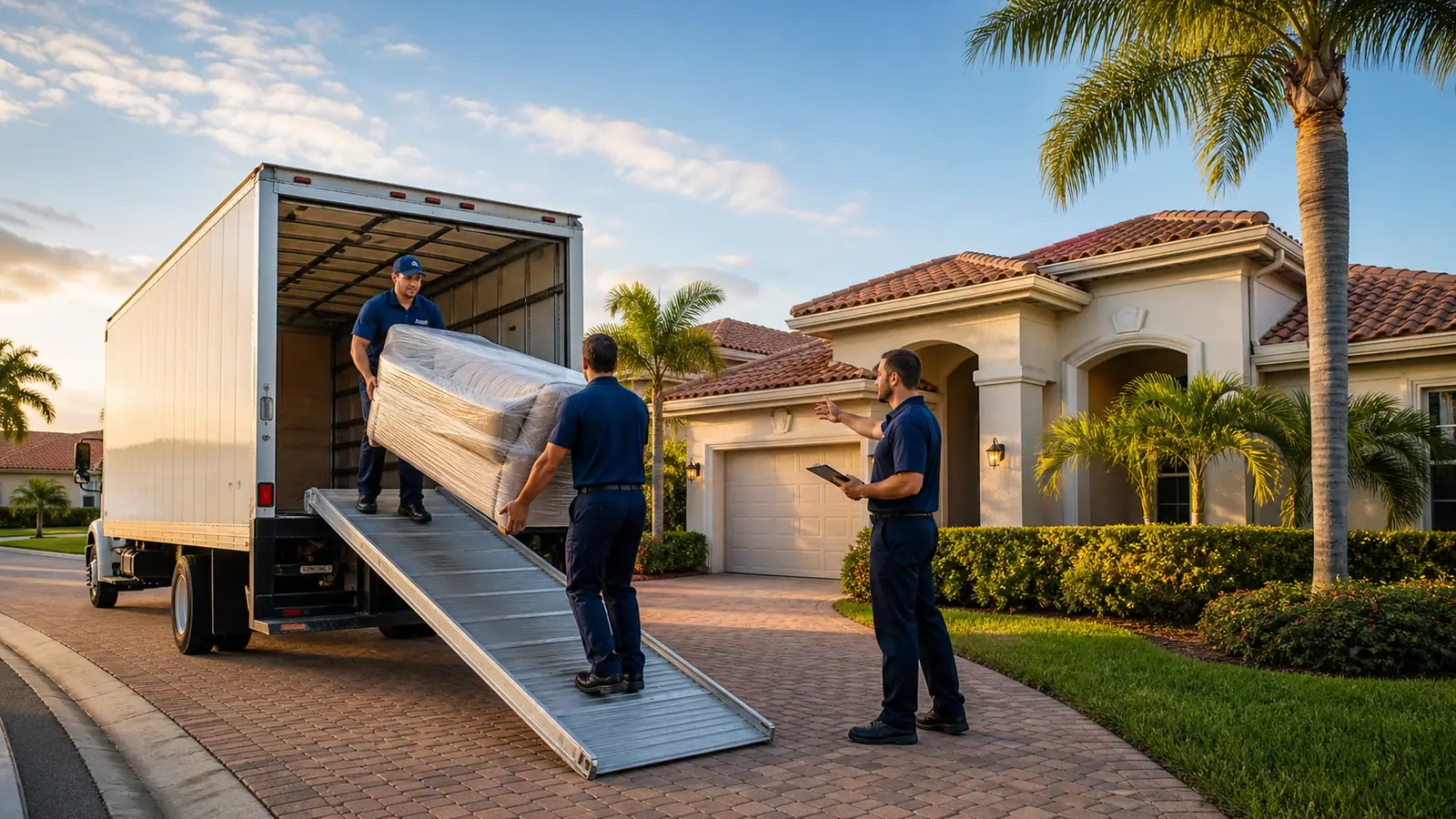
Moving to Port St. Lucie with Andersen Moving — crews handle origin pickup, transit, and Treasure Coast unload as one project.
Table of Contents
Table of Contents
You signed the contract. You picked the city of Port St. Lucie. Now you stare at a map of Port St. Lucie and wonder which neighborhood actually fits your life. You also wonder what your real monthly budget will look like and how to get moved in without sweating through every box. Most relocation articles skip those parts.
This is the practical version. We will lay out how the city is organized and who each area really suits. We will cover what 2026 living costs look like beyond the headline home price. We will also explain how Florida heat, HOA rules, and hurricane season change your moving plan.
Why People Are Moving to Port St. Lucie in 2026
Moving to Port St. Lucie keeps drawing relocators because the city offers more space, a quieter pace, and better value than many South Florida coastal cities. Families want bigger yards. Retirees want amenity-rich neighborhoods. Remote workers want a calmer base with reasonable access to airports and the coast.
The city sits on the Treasure Coast, north of Palm Beach County and south of Vero Beach. Population growth has been steady. Port St. Lucie ranks among Florida’s fastest-growing larger cities according to Census Bureau population estimates.
The honest counterweight is that Port St. Lucie is not a beach town. It is suburban, spread out, and car-dependent. Most beach trips run east toward Jensen Beach or Hutchinson Island. That is fine if you want a quieter inland base. It is a problem if you assumed you were buying ocean walks at sunset.
Locals also warn newcomers about distance. Driving across the city can take 20 to 35 minutes depending on traffic. Port St. Lucie covers more than 120 square miles. That layout shapes everything from commute time to how movers plan their routes.
How Port St. Lucie Is Laid Out
Think of Port St. Lucie as a few large zones rather than hundreds of micro-neighborhoods. That mental map saves hours of confusion when you tour homes online.
The western side holds the newer master-planned development around Tradition and the established St. Lucie West area. Central and east Port St. Lucie include older neighborhoods, the original 1950s grid, and corridors along Becker Road, Gatlin Boulevard, and Torino Parkway.
Each zone trades polish for flexibility in a different way. Newer master-planned areas have amenities, walkable centers, and rules. Older corridors offer larger lots, fewer restrictions, and more room for boats or work vehicles. Knowing which trade you want before touring homes makes the search far easier.
If you plan to work in Stuart or Jupiter, central or east Port St. Lucie usually shortens the drive. If you want a brand-new home with a clubhouse and trails, western Port St. Lucie is the obvious starting point. Our crews specializing in moving to Port St. Lucie at Andersen Moving’s Port St. Lucie movers page work across all of these zones every week.
Port St. Lucie Neighborhoods and Who They Fit
The biggest mistake newcomers make is shopping homes before they pick a lifestyle bucket. Each Port St. Lucie neighborhood fits a different kind of buyer. The wrong fit shows up fast after move-in.
Master-planned Tradition offers newer homes, walkable town center events, and a polished feel for families and remote workers. St. Lucie West is convenient and family-oriented with easy access to I-95, shopping, and the spring training area. Riverland and similar 55+ communities target active retirees who want resort-style amenities and age-restricted neighbors. PGA Verano and PGA Village suit golf-focused buyers who value gates, amenities, and a curated lifestyle. Becker, Gatlin, and Torino corridor areas appeal to buyers who want larger lots, room for boats or RVs, and fewer HOA rules.
The trade is simple. Master-planned and gated communities give you newer infrastructure and amenities for the price of rules and fees. No-HOA areas give you freedom and space for the price of less polish.
Neighborhood Type
Best For
HOA Intensity
Key Trade-Off
Tradition
Families, remote workers
Higher
Newer homes and walkability, more rules and fees
St. Lucie West
Families, baseball fans, commuters
Moderate
Convenience and access, busier corridors
Riverland and 55+ areas
Active retirees, snowbirds
Higher
Resort amenities, age restrictions
PGA Verano, PGA Village
Golf buyers, polished gated living
Higher
Curated lifestyle, gate procedures
Becker, Gatlin, Torino areas
Boat, RV, work-truck owners
Low or none
Flexibility and space, fewer built-in amenities
The table only points you in a direction. Tour at different times of day, check commute times during rush hour, and read the HOA rules before you fall for the kitchen.
Cost of Living and Housing in Port St. Lucie in 2026
Moving to Port St. Lucie is no longer a bargain-basement Florida choice. It still beats many South Florida coastal markets on price for similar space. Headline home prices alone hide the real number, though. Your monthly cost is the figure that decides whether the move feels comfortable.
Build your budget around six categories: housing, taxes, insurance, utilities, HOA or community fees, and CDD fees where they apply. Florida property insurance has risen sharply in recent years, according to the Florida Office of Insurance Regulation. Newcomers should not assume their old premium will transfer.
Two homes priced the same can have very different monthly totals once HOA dues, CDD fees, and insurance are added in. Always run the full math before you fall in love with the listing.
Cost Category
What To Include
Why It Matters
Mortgage or rent
Principal, interest, lease total
Largest single category for most households
Property taxes
Annual millage rate, county assessment
Florida has no state income tax, so counties lean here
Insurance
Homeowners or renters, flood where applicable
Coastal exposure and storm risk drive premiums
Utilities
Electric, water, sewer, internet
Summer cooling costs run higher in Florida
HOA dues
Monthly or quarterly community fees
Heavier in master-planned and gated areas
CDD or special fees
Community Development District assessments
Common in newer master-planned communities
Ask the seller or listing agent for the full monthly breakdown in writing. The home that looked cheaper on the listing site can end up more expensive than a slightly pricier non-HOA home once every line item lands.
Moving Day Realities in Port St. Lucie
Moving to Port St. Lucie has a few realities most relocation guides go silent on. Buying the home is one project. Getting your furniture inside it is another. Florida adds friction that newcomers rarely expect.
The first reality is heat. From late spring through early fall, Port St. Lucie regularly runs above 90°F with high humidity. The National Weather Service Miami office tracks heat advisories for the region almost daily in midsummer. Loading furniture at 2 p.m. in August is not the same job as loading at 8 a.m. in February.
The second reality is afternoon storms. Between June and September, daily thunderstorms can roll in by 2 or 3 p.m. and shut down loading for an hour or more. The third is community access. HOA buildings, gated neighborhoods, and condo towers often require move windows, certificates of insurance, and elevator reservations. The fourth is travel distance inside the city itself.
The community you land in changes the move plan as much as the size of the home. A no-HOA single-family home gives the crew flexibility. A gated 55+ community with weekday-only move windows gives you constraints.
Factor
HOA or Gated Community
Non-HOA Area
Move windows
Often weekday, restricted hours
Flexible, including weekends
Truck access
Gate code, guest list, sometimes shuttle
Direct driveway access in most cases
Certificate of insurance
Frequently required
Rarely required
Elevator reservations
Required in condos and towers
Not applicable
Boat, RV, or trailer storage
Often restricted
Usually allowed
Confirm community rules in writing before you book a date. Most Port St. Lucie HOA delays trace back to missing paperwork, not the moving crew itself.
When To Schedule Your Move to Port St. Lucie
Timing is the single biggest lever you control when moving to Port St. Lucie. The right window protects your budget, your belongings, and your sanity. The wrong window hands you a hot, expensive, weather-disrupted move.
February usually wins on weather and price. Our deeper look at why February beats summer for Treasure Coast moves explains the cost gap. Late spring is the next-best compromise window for many families. Our moving in May on the Treasure Coast guide covers that window in detail.
Summer creates the most friction. Hurricane season opens June 1 and runs through November 30. Peak activity falls between mid-August and late October, according to the National Hurricane Center. Storms can shift move dates with little warning.
Season
Weather
Mover Demand
Key Advantage
Winter (December to February)
Cool, dry, comfortable
Lower
Best pricing, full crew choice
Spring (March to May)
Warming, lower storm risk
Rising
Strong balance of weather and timing
Summer (June to August)
Hot, humid, daily storms
Peak
Aligns with school break, costs more
Fall (September to November)
Hurricane peak through October, cooling later
Falling
Late fall offers price relief and decent weather
If your closing date is fixed, work backward from it. If your date is flexible, lean toward winter or early spring whenever possible.
Illustrative Port St. Lucie Moving Scenario
Illustrative scenario: A family of four is moving to Port St. Lucie from suburban Atlanta in spring 2026. They tour two short-listed homes. One is a 4-bedroom in Tradition with HOA dues. The other is a similar-sized no-HOA home off Becker Road with extra yard space.
The Tradition home lists slightly higher but includes pool, trails, and walkable town center events. The no-HOA home prices lower and has room for a boat the family already owns. They run the full monthly math, including HOA fees and slightly higher insurance for the no-HOA property. They pick the no-HOA home because the monthly total is comparable and the boat will not fit Tradition’s rules.
They book their move for early April, ahead of summer heat and hurricane season. The crew confirms a Saturday loading window and plans a 7 a.m. start at the origin home. By 1 p.m. the truck is unloaded. The family avoids the 3 p.m. storm. The dog is settled in the fenced yard by dinner.
The point is not the address. It is the sequence. Compare neighborhoods on full monthly cost, match the home to actual lifestyle items, and plan the move calendar around weather windows you can predict.
Step-by-Step Moving Timeline to Port St. Lucie
A move to Port St. Lucie is easier when each step has a deadline. Spread the work across two months and most of the stress disappears. Cram it into the final week and almost nothing goes right. Booking, paperwork, and HOA coordination happen earlier than people expect.
Timeframe
Action
Why It Matters
60 days out
Book movers, confirm dates, request HOA rules
Locks the best date and crew availability
30 days out
Submit certificate of insurance, reserve elevator, start decluttering
HOAs and condos often require advance paperwork
14 days out
Confirm utilities at new home, schedule disconnects at old home
Avoids dark first night or missing internet
7 days out
Pack non-essentials, label by room, prep an essentials box
Reduces moving-day decisions
Moving day
Start early, walk crew through priorities, do final walkthrough
Protects belongings and your timeline
First week after
Unpack essentials, register vehicles, review hurricane plan
Sets up daily life and storm readiness
That last row matters more in Florida than in most places. Newcomers should learn evacuation zones and pick a hurricane kit location in the first week. The Florida Division of Emergency Management offers official guidance on supplies and zone lookups.
Common Moving-Day Mistakes and How to Fix Them
Some mistakes are universal. Others are specific to a hot, spread-out city with strict HOAs and an active storm season. Most Port St. Lucie problems are scheduling problems. A bad date, a missing form, or a late start almost always traces back to weak planning two or four weeks before move day.
Mistake
Consequence
Fix
Booking a midsummer afternoon start
Heat exhaustion, storm delays, longer hours
Pick a winter or spring date or an early-morning start
Skipping HOA paperwork
Truck turned away at gate or denied elevator
Submit certificate of insurance and rules check 2 to 4 weeks out
Underestimating drive times
Late arrivals at origin or destination
Run the route at the same hour you plan to move
Ignoring hurricane season
Forced last-minute reschedule
Move before June 1 when possible or build a backup date
Choosing the wrong neighborhood
Lifestyle mismatch and resale issues
Compare on full monthly cost and lifestyle fit, not list price
Many of these mistakes when moving to Port St. Lucie show up in our broader breakdown of common rookie mistakes when hiring Treasure Coast movers. The patterns repeat across cities, but Florida amplifies the cost when they happen.
Frequently Asked Questions
Is Port St. Lucie still affordable in 2026 compared with other Florida cities?
Port St. Lucie is no longer bargain Florida, but it remains more affordable than many South Florida coastal cities for comparable space. The savings show up when you compare full monthly cost rather than list price. Build the budget with mortgage or rent, taxes, insurance, utilities, HOA dues, and any CDD fees. That total tells the real story.
Which Port St. Lucie neighborhoods are best for families?
Families often gravitate toward Tradition for its walkable town center and newer homes. St. Lucie West is a strong alternative thanks to its convenience to I-95, parks, and schools. Both areas carry HOA rules and fees. For more yard space and fewer rules, family buyers also do well in the Becker, Gatlin, or Torino corridor areas.
What areas are best if I want no HOA and room for a boat or RV?
The corridors around Becker Road, Gatlin Boulevard, and Torino Parkway are the most common landing spots for buyers who want flexibility. These older or mixed-age pockets often allow boats, RVs, and work trucks that gated communities restrict. You trade newer infrastructure for space, which is a fair deal for owners who use those items often.
How far is Port St. Lucie from the beach, and should that affect where I live?
Most homes sit 15 to 25 minutes from the nearest beach access, typically toward Jensen Beach or Hutchinson Island. If beach time is a weekly priority, an east-side address shortens the drive. If beach access is a monthly outing, the western master-planned areas may serve you just fine.
What is moving day like in Port St. Lucie during summer?
Summer moves run hotter, slower, and more weather-disrupted than other seasons. Temperatures often top 90 degrees Fahrenheit. Afternoon thunderstorms can shut down loading by 2 or 3 p.m. The fix is an early-morning start, water and shade plans for the crew, and a backup date in case a storm forces a delay.
When is the best time of year to move to Port St. Lucie?
Winter, especially January and February, usually wins on cost and comfort. Late spring is the next-best window if you need to align with a school calendar. Summer should be your last choice, especially during August and September when hurricane risk peaks.
How much should I budget for moving costs beyond the mover’s quote?
Add 10 to 20 percent on top of the quote for packing supplies, tips, cleaning, and unexpected access issues. Stairs, long carries, heavy items, and certificate of insurance fees can all change the final bill. The most reliable way to avoid surprises is to walk the crew through the home in advance and lock the scope in writing.
How early should I book movers for a Port St. Lucie move?
Book at least four to six weeks out for off-peak winter and spring moves. Peak summer dates often require eight or more weeks of lead time. Booking early protects your preferred date and gives you time to coordinate HOA paperwork. It also removes the temptation to grab whichever mover still has an opening.
What do I need to coordinate with my HOA or condo association before moving in?
Ask for the move-in packet in writing as soon as possible. Most communities require a certificate of insurance from the mover, a defined move window, and sometimes an elevator reservation. Submit everything two to four weeks out. Skipping that step is the most common reason a truck gets turned away at the gate.
How does Andersen Moving help long-distance moves into Port St. Lucie?
Our crews coordinate the origin pickup, transit, and Port St. Lucie unload as one project. The timing is built around heat, storms, and community rules. We handle HOA paperwork, gate access, and elevator reservations as part of the plan. Reach our team directly for a written estimate.
Key Takeaways
Neighborhood fit matters more than list price
- Match the area to the lifestyle, not just the floor plan
- Compare HOA, no-HOA, and 55+ areas on full monthly cost
- Tour at rush hour, not midday, to feel real commute times
Cost reality runs past the mortgage line
- Build the budget with taxes, insurance, HOA, and CDD fees
- Florida insurance has risen, do not assume an old premium transfers
- Two same-priced homes can have very different monthly totals
Moving day in Port St. Lucie has Florida-specific traps
- Heat, humidity, and afternoon storms shape the work hours
- HOA rules dictate truck access, windows, and paperwork
- Long city geometry stretches drive times more than newcomers expect
Timing and planning are your biggest stress reducers
- Winter and early spring usually beat summer on price and comfort
- Book movers four to eight weeks out depending on season
- Submit HOA paperwork two to four weeks before move day
Ready to Plan Your Port St. Lucie Move?
You now have a real picture of moving to Port St. Lucie, how the city works, where to land inside it, and how to plan a move that does not punish you with heat, storms, or scheduling friction. The next step is a written estimate built around your home, your community, and your timeline.
Andersen Moving has served Treasure Coast families and businesses moving to Port St. Lucie since 2018. We bring transparent quotes, owner-operated oversight, and crews that know the difference between a gated HOA in Tradition and a single-family lot off Gatlin. We are licensed, insured, and registered as Fla. Mover Reg. No. 3030.
Here is what working with us includes:
- Free consultation to review your home, timeline, and budget
- Written, transparent estimates with no hidden fees
- Local crews familiar with Port St. Lucie HOA rules and access
- Specialty handling for pianos, art, antiques, and large items
- Full local and long-distance moving services under one roof
- Flexible scheduling that works around weather and community windows
Ready to lock in your Port St. Lucie move date?
Call: 772-777-6364
Website: andersenmovingfl.com
We also serve nearby Stuart, Jensen Beach, Jupiter, Fort Pierce, Palm City, and Hobe Sound. Book your move now to start planning a Port St. Lucie relocation that runs on time. To verify any Florida mover’s registration before you book, look up records through the Florida Department of Agriculture and Consumer Services moving company directory.
Andersen Moving | Licensed, Insured Movers Serving Treasure Coast Since 2018